Naples and superstition: a serious thing, preferably said with a smile
In Naples, superstition is not only fear of bad luck. It is a theatrical, affectionate and often very funny way of dealing with the unexpected. A Neapolitan can be perfectly modern, use a smartphone, pay by card and book everything online; then, if someone says something a little too optimistic, he may quietly touch the red horn in his pocket. Not because he really believes in it, of course. But because the city seems to whisper: "What if it works?".
That is the charm of Neapolitan superstition: it lives between faith, family habit, street theatre and emotional self-defence. It does not always pretend to be logical. Actually, that is part of its power. It is a small insurance policy against chaos, paid in gestures, jokes and lucky charms.
Jettatura: when a look weighs more than a tax bill
The great classic is jettatura, the unlucky influence that someone may carry around, intentionally or not. In Naples, the unlucky person does not even have to be evil. Sometimes he is simply the one who enters a room and the light goes out, the glass breaks, the tram leaves, and then he says "what a beautiful day!" two minutes before the storm.
The interesting thing is that jettatura is not just street gossip. In 1787 the Neapolitan jurist Nicola Valletta published his famous Cicalata sul fascino volgarmente detto jettatura, a semi-serious essay that tried to discuss the phenomenon almost rationally. In other words, Naples laughed about superstition, but also wrote learned pages about it. Very Neapolitan.
The red horn: small, crooked and very busy
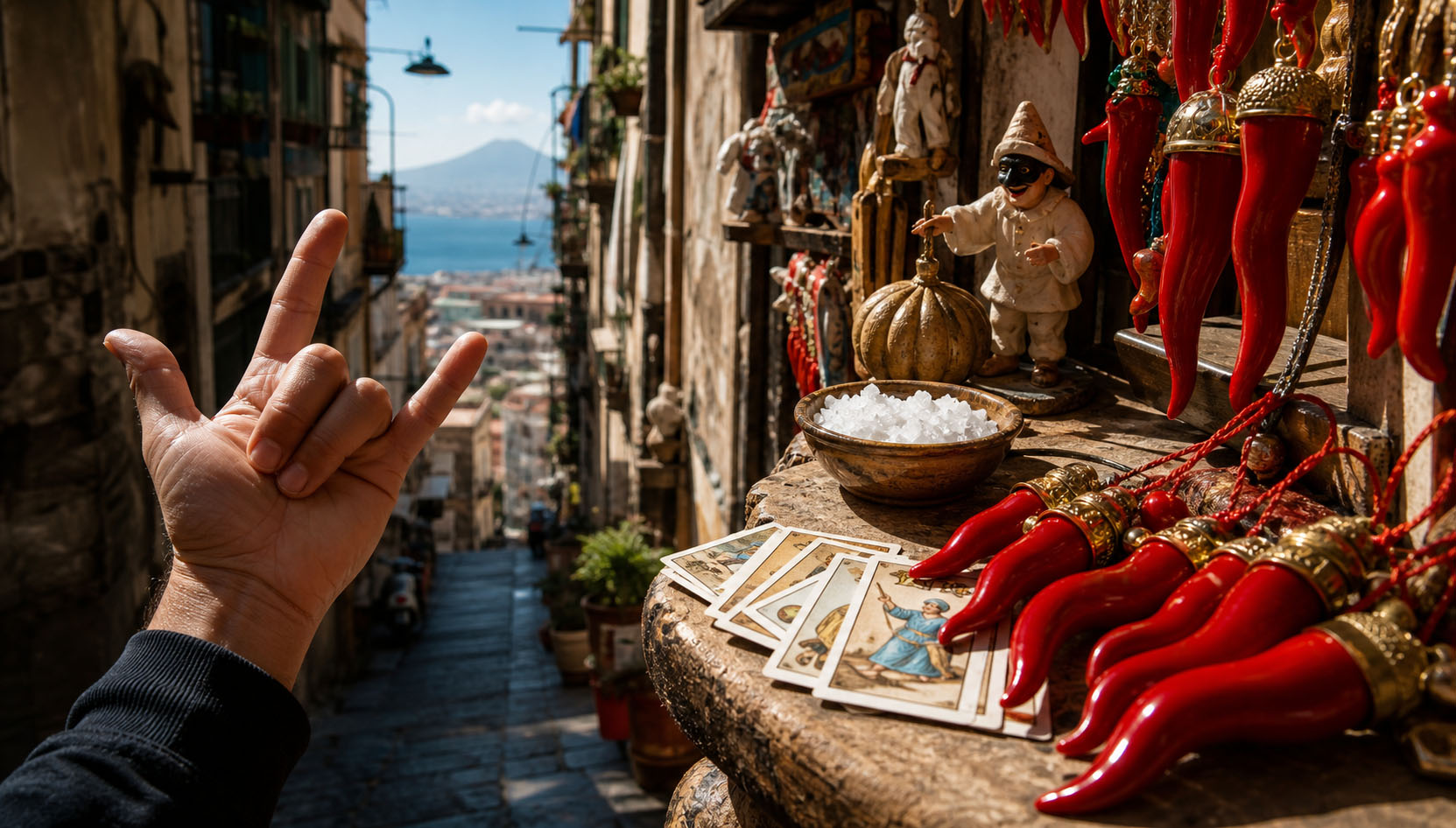
The king of Neapolitan lucky charms is 'o curniciello, the little red horn. It should be red, pointed, and preferably received as a gift rather than bought for yourself, because even luck appreciates good manners. The horn protects against the evil eye and bad luck, but its story is older than the souvenir hanging from a car mirror.
Its shape recalls ancient symbols of strength, fertility and protection. In the Greek and Roman world, figures such as Priapus and phallic amulets had an apotropaic function: they were meant to ward off evil and envy. Naples made the idea more elegant and portable: a red cornicello, traditionally sometimes made of coral, doing its job without making too much noise.
But beware: the horn is not magic. If you cross the street without looking, the horn will probably think, "I am trying my best, but please cooperate".
Making horns: the emergency button of superstition
When danger suddenly appears, there is not always time to search for an amulet. So the gesture comes out: index finger and little finger extended, hand pointing down, possibly accompanied by a decisive "Tie!". It is the first aid of superstition.
The horn gesture, like the cornicello, is connected with warding off the evil eye. In Naples, though, it must be used carefully, because horns can also refer to betrayal in love. So before making the sign toward someone, check the context. A badly timed superstition can become a very real argument.
Salt, oil and other domestic disasters
One of the best-known beliefs concerns spilled salt. For centuries salt was precious: it preserved food, was traded, taxed and respected. Wasting it was unlucky also for a very practical reason: it cost money. Hence the old gesture of throwing a pinch over the shoulder, as if saying to bad luck: "Here, take this and leave us alone".
Spilling oil is not a good sign either. Not only because someone will have to clean the floor, but because oil traditionally meant food, light, care and domestic wealth. Losing oil meant losing something valuable. In Naples, where the home can be a small kingdom, such things are not treated lightly.
The Smorfia: dreaming, counting and negotiating with fate
Then there is the Neapolitan Smorfia, the popular dictionary that turns dreams, people, objects and situations into numbers to play. A talking dead person, the sea, bread, laughter, tears: everything can become a number. Is it superstition? Cabala? Domestic poetry? Probably all three at once.
The Smorfia says a lot about the Neapolitan character: when fate sends a strange dream, Naples does not simply accept it. It asks for at least three good numbers.
"It is not true... but I believe it"
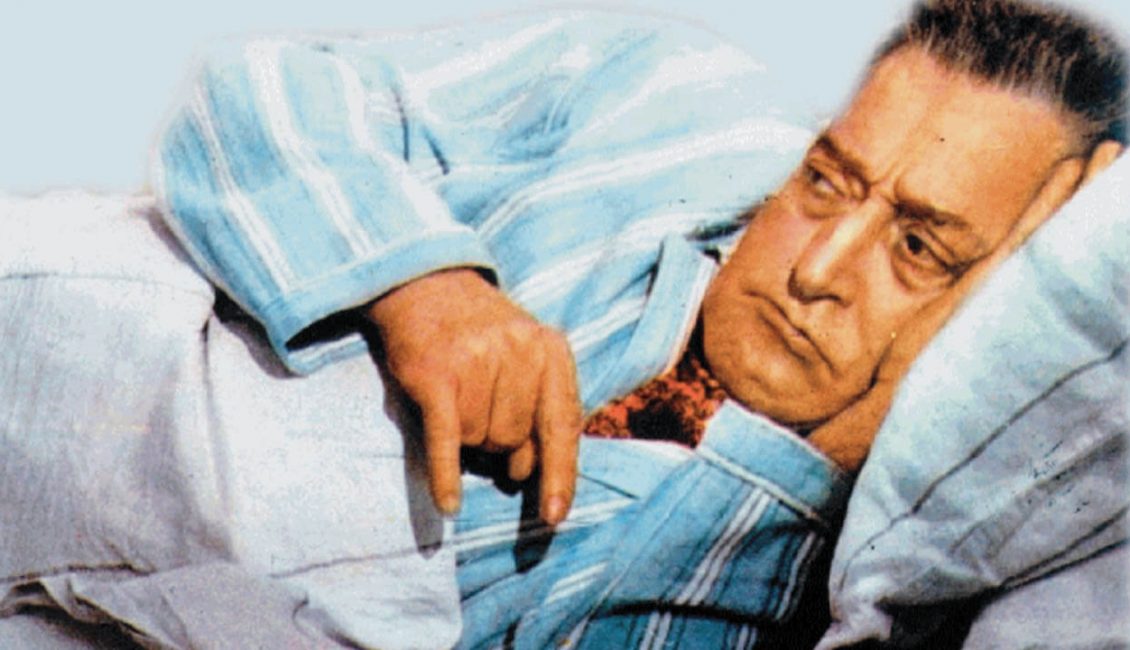
The perfect sentence for all this is "Non è vero... ma ci credo", made famous by the three-act comedy written by Peppino De Filippo in 1942 and later by the 1952 film. The main character is tormented by superstition, trapped between fears and lucky signs. We laugh, but we recognise something familiar: that little part of us that claims to be rational, while quietly avoiding unnecessary risks with destiny.
That is the point. Neapolitan superstition is everyday theatre. People perform it to make fear smaller, laugh so life feels lighter, and carry a red horn not because everything will suddenly become perfect, but because answering fate with style is already a victory.
A culture of uncertainty
Neapolitan superstition can also be read as a historical response to uncertainty. Naples has been a capital, a port, an extremely crowded city, a place of epidemics, earthquakes, eruptions, sudden poverty and equally sudden fortune. In a world where destiny often seemed stronger than individual will, small gestures and amulets offered at least the illusion of negotiating with the invisible. This is not simply ignorance; it is a symbolic language created to give fear a shape.
That is why superstition can coexist quite comfortably with religion, modernity and even irony. A Neapolitan may laugh at the evil eye and, at the very same moment, make the horn gesture under the table. The contradiction is not a problem. It is considered a refined form of caution.
So, if someone in Naples gives you a cornicello, accept it. Do not ask too many questions. Say thank you, smile and keep it. It cannot hurt. And if it helps, even better.


No comments have been published yet. Be the first to leave one.