The Janara: first of all, lock the door
The Janara is one of the most famous figures in Campanian folklore. She is not the elegant witch of illustrated books: she is rural, nocturnal and mischievous. Tradition says she could enter houses, disturb sleep, tangle horses' manes and make even the most rational uncle suddenly very cautious.
Benevento, the walnut tree and the witches
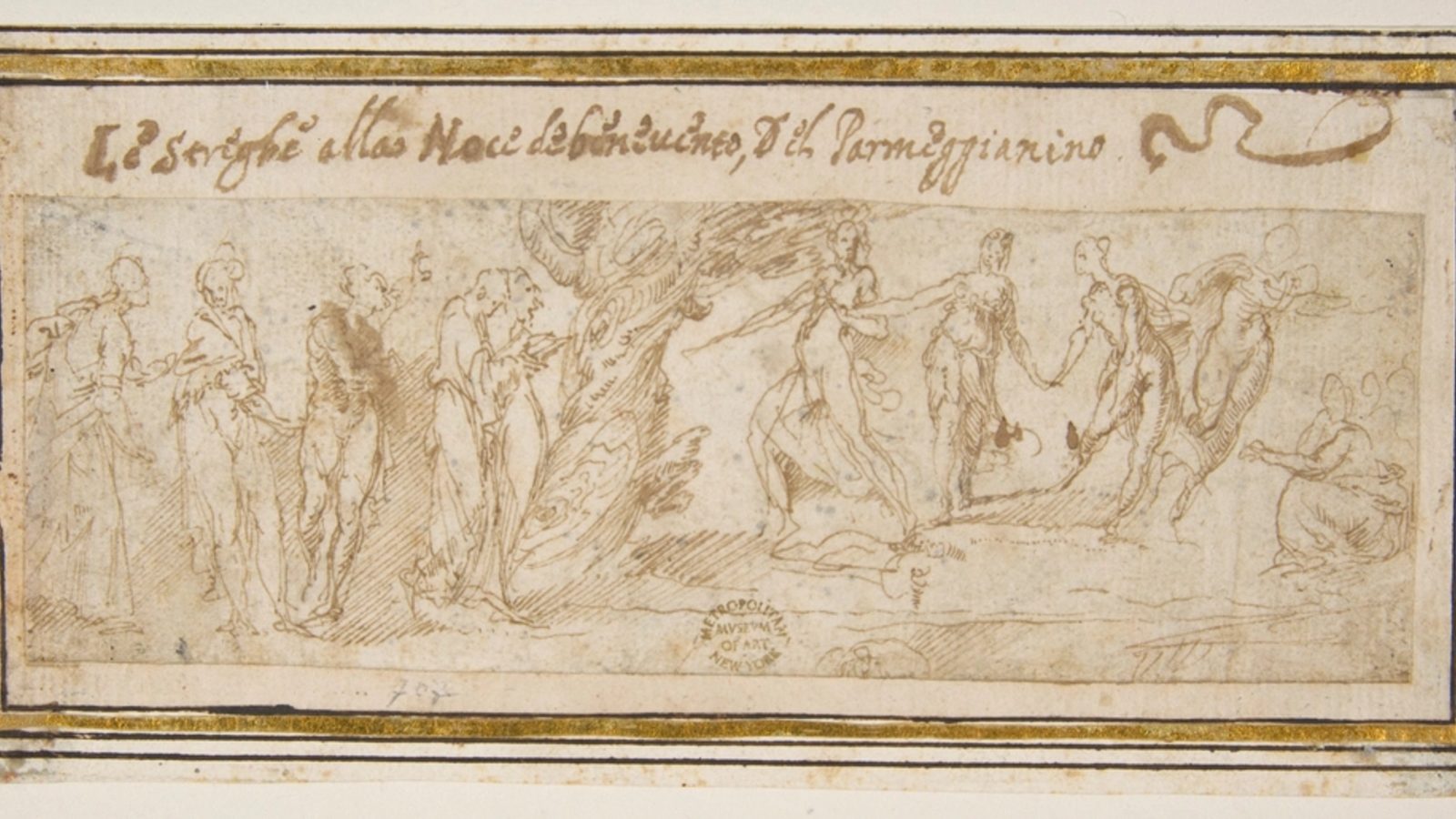
The Janara legend is often linked to Benevento and to the famous walnut tree under which witches were said to gather for their sabbaths. Benevento's connection with witches is old, fed by medieval stories, rural superstition and popular memory. The image became so strong that even today the word Benevento easily calls witches to mind.
How did people recognise her?
According to the stories, a Janara could look like an ordinary woman: perhaps a quiet neighbour or someone who knew a little too much. To protect the house people used salt, brooms behind doors, sacred objects and domestic rituals. The idea was simple: if the witch wants to come in, at least make her waste time counting broom bristles.
Fear, control and popular imagination
Behind the Janara are real fears: night, illness, childbirth, animals, harvests and envy. In a rural world where not everything had an explanation, stories gave anxiety a face. And in Southern Italy, that face could be frightening, but also wonderfully told.
A Campanian myth more than a strictly Neapolitan one
It is important to be precise: the Janara belongs above all to the Sannio and inland Campanian imagination, with Benevento as its symbolic centre, but it speaks naturally to the Neapolitan world of popular beliefs. Naples, as a port city, absorbs and reworks myths from the whole region: the Munaciello, the Bella 'Mbriana, jettatura, the souls of Purgatory. The Janara enters this constellation as a rural and nocturnal figure, less domestic than the Munaciello and more disturbing than urban superstition.
The woman outside the norm
Like many witch figures in Europe, the Janara also reflects social fear of women considered independent, marginal, poor, elderly or simply non-conforming. Folklore is never innocent: it preserves poetry, but also suspicion, exclusion and mechanisms of control. Today the Janara can therefore be read not only as a fantastic creature, but also as a trace of women's history left at the margins of official documents.
Today the Janara no longer terrifies people as she once did. Still, if you hear strange noises at night, checking the broom behind the door will not hurt.



No comments have been published yet. Be the first to leave one.