The most important squares in Naples
Naples cannot be understood only by visiting its museums or walking through its narrow streets: Naples must also be understood by stopping in its squares. The squares are the city's open-air living rooms, the places where history and daily life meet without asking permission. They are stages for celebrations, protests, markets, first dates, street musicians, students sitting on steps, tourists looking up in wonder and Neapolitans simply living their city.
Some squares speak of kings and viceroys, others preserve the memory of popular revolts, while others have become symbols of nightlife, shopping or the elegant seaside promenade. There is the monumental Naples of Piazza del Plebiscito, the university spirit of Piazza Bellini, the religious heart of Piazza del Gesù, the people's memory of Piazza Mercato, the seafront atmosphere of Mergellina and the hilltop life of Vomero.
Let's discover the most important squares in Naples, not only for their beauty, but for what they represent in the city's memory, folklore and everyday life.
Piazza del Plebiscito: Naples' great monumental living room
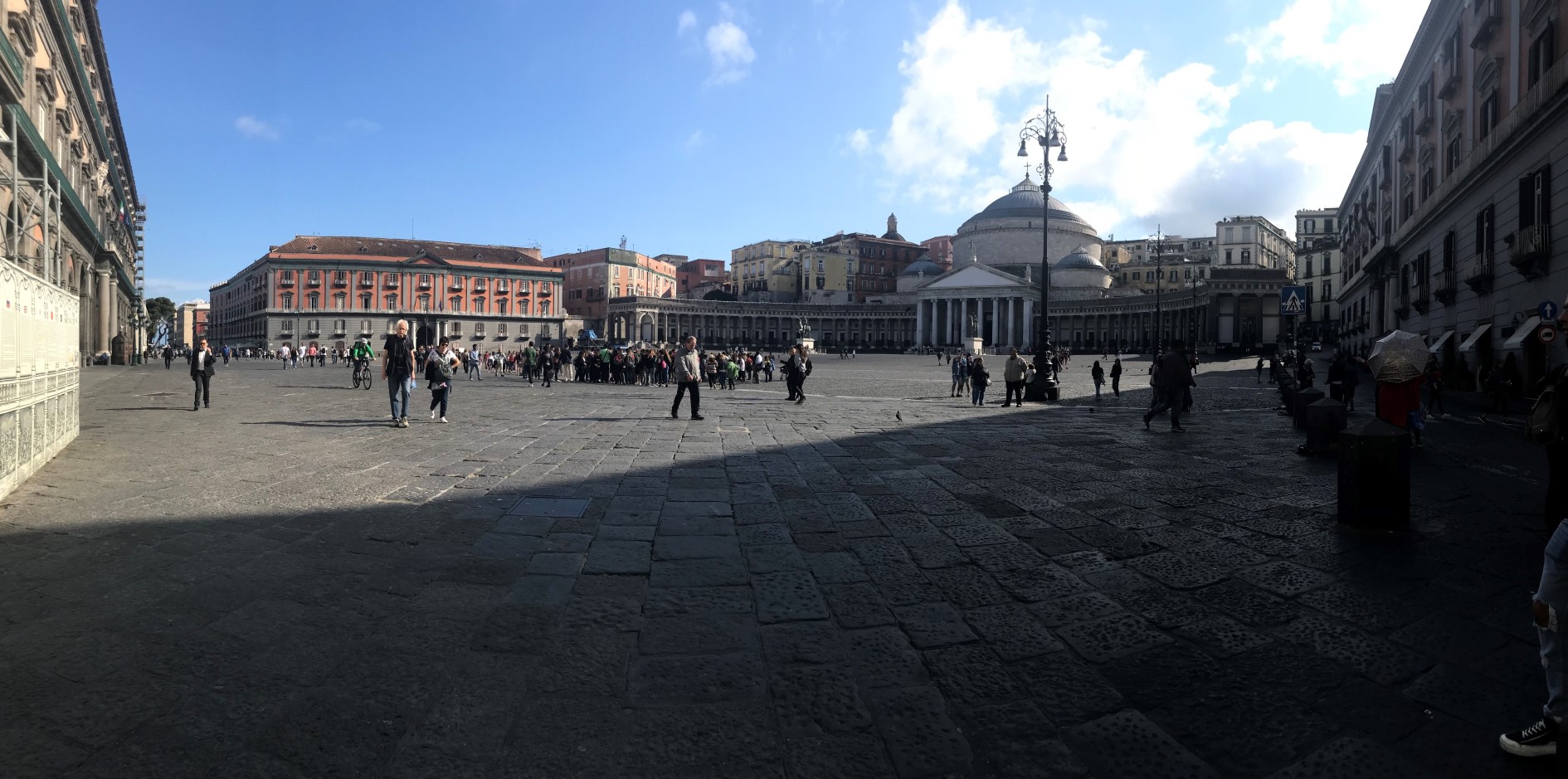
Piazza del Plebiscito is probably the most famous square in Naples. Vast, scenic and elegant, it opens between the Royal Palace, the Basilica of San Francesco di Paola, Palazzo Salerno and the Prefecture building. It is the Naples of great ceremonies, concerts, New Year's Eve celebrations, public events and unforgettable photographs.
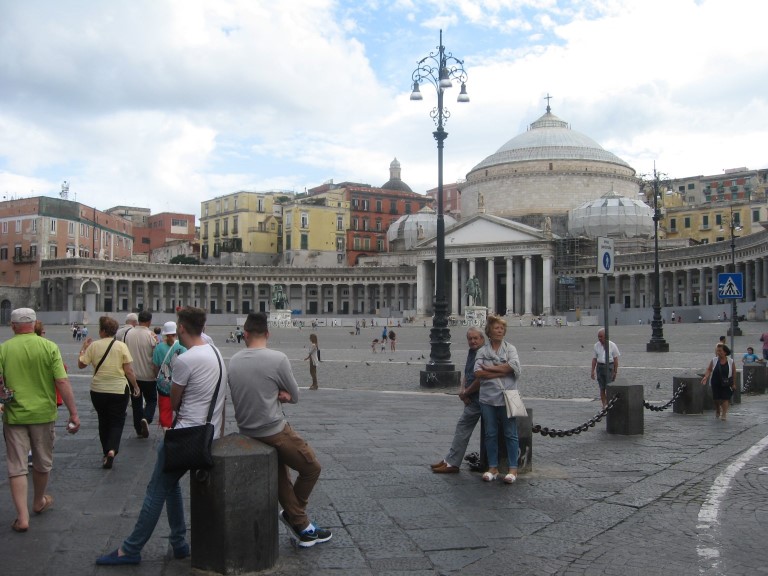
Piazza del Plebiscito
This area did not always have the orderly appearance we know today. It was once an irregular open space near the Royal Palace, gradually transformed into the monumental heart of the city. The basilica, with its semicircular colonnade, gives the square an almost Roman grandeur, while the equestrian statues of Charles III and Ferdinand I recall the long relationship between Naples and the Bourbon dynasty.
But Piazza del Plebiscito is not only official history. It is also pure folklore: visitors are often invited to try crossing the square blindfolded, starting from the Royal Palace and attempting to pass between the two statues. Almost nobody manages to walk perfectly straight. Whether it is the slight slope, suggestion or a small Neapolitan spell, it does not really matter: in Naples, even a royal square can become a popular game.
Piazza Trieste e Trento: the elegant passage between theatre, cafés and the Royal Palace
Next to Piazza del Plebiscito stands
Piazza Trieste e Trento, smaller but extremely important in the life of the city center. It is a square of passage, waiting and meeting: from here you can reach the San Carlo Theatre, the Royal Palace, the Galleria Umberto I, Via Chiaia and Via Toledo.
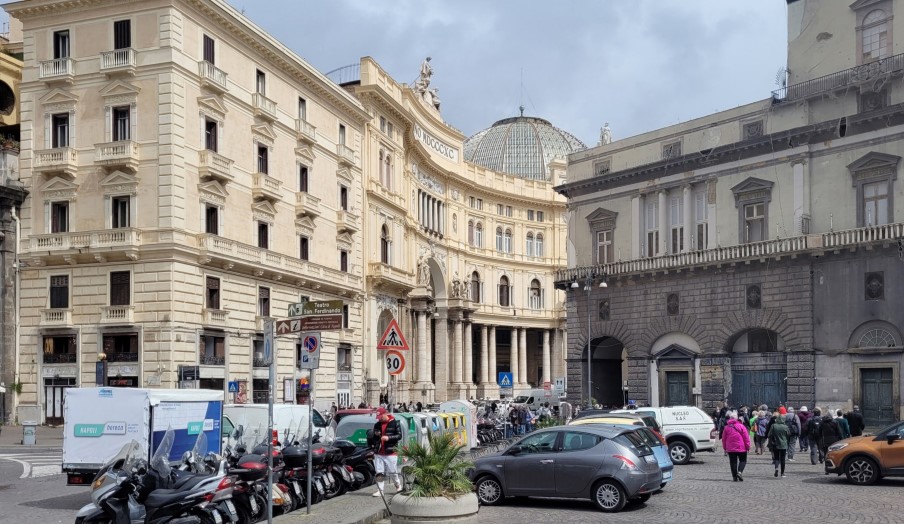
Piazza Trieste e Trento
Its most recognizable symbol is the Fontana del Carciofo, the "Artichoke Fountain", nicknamed by Neapolitans because of its curious shape. Around the square you can still feel the atmosphere of the elegant city center, with historic cafés, theatres, shopping streets and people strolling.
It may not be a square where people spend hours, but it is one everyone crosses. And that is exactly its secret: it is a natural junction, a hinge between royal Naples, theatrical Naples and everyday Naples.
Piazza Municipio: civic power between Castel Nuovo and the port
Piazza Municipio is one of the most strategic squares in Naples. On one side stands Palazzo San Giacomo, the City Hall; on the other, the powerful mass of the Maschio Angioino, or Castel Nuovo, symbol of medieval and Angevin power. Behind it lies the port: arrivals, departures, cruise ships, ferries and journeys to the islands.
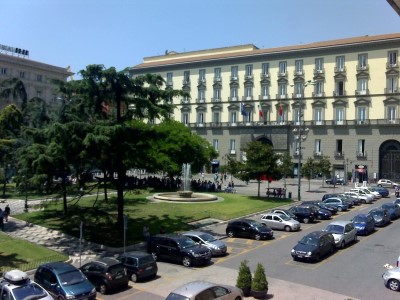
Piazza Municipio
This square brings together administrative Naples, tourist Naples and maritime Naples. Here you can feel the breath of a city that has never been closed in on itself: Naples looks to the sea, trades, welcomes, leaves and returns. The square has changed many times over the centuries and today also plays an important role in mobility, thanks to the nearby metro station and its position along the routes to the historic center.
Piazza Municipio is perfect for understanding one thing: Naples does not have just one center. It has an ancient center, a monumental center, a commercial center and a maritime center. Here, all these worlds touch within just a few steps.
Piazza Dante: books, students and the gateway to the ancient city
Piazza Dante is one of the most lived-in squares in Naples. It stands at the beginning of Via Toledo and, through Port'Alba, opens into the Decumanus Major and the world of booksellers, stalls and old bookshops. It is a square of students, commuters, readers, tourists, street musicians and Neapolitans on the move.
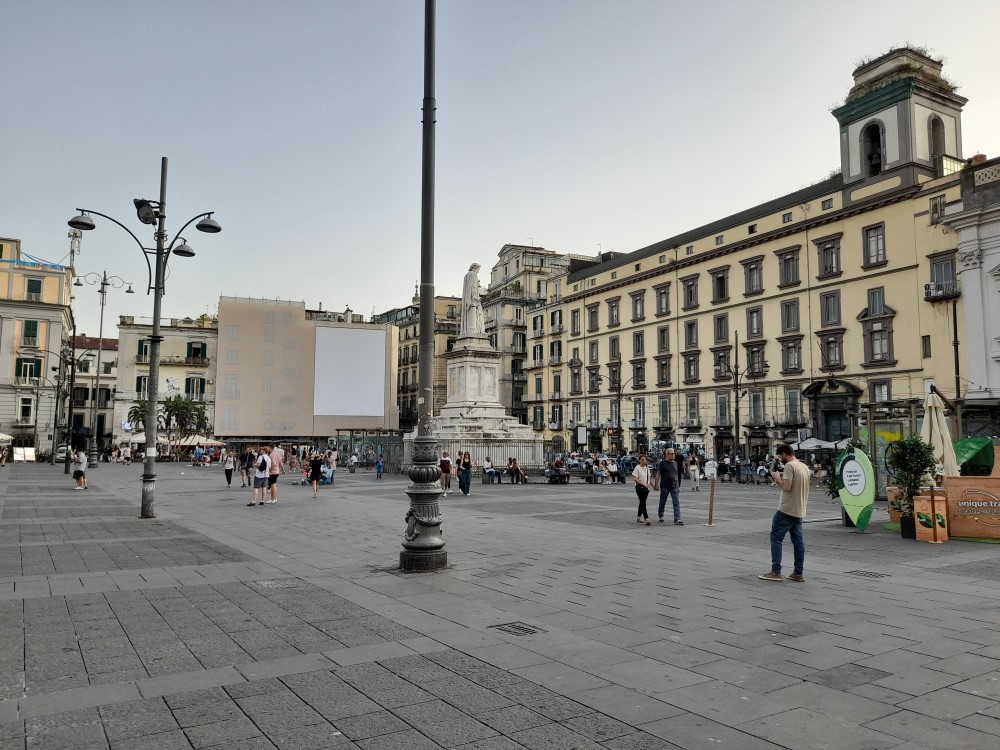
Piazza Dante
The large hemicycle that defines the square is connected to the project of the Foro Carolino, created in the 18th century to celebrate Charles of Bourbon. In the center, the statue of Dante Alighieri seems to observe the constant movement of the city. With its metro station, the square has also become a very convenient meeting point before entering the historic center.
By day it is animated by schools, offices and bookshops; in the evening it often becomes a meeting point before heading toward Piazza Bellini, Piazza del Gesù and San Domenico. It is cultural but popular, orderly but noisy, literary but deeply Neapolitan.
Piazza del Gesù Nuovo: faith, mystery and the heart of Spaccanapoli
Piazza del Gesù Nuovo is one of the most fascinating places in the historic center. Here you find the Church of Gesù Nuovo, with its mysterious diamond-shaped façade, the Basilica of Santa Chiara, noble palaces and the Spire of the Immaculate Virgin rising in the center of the square.
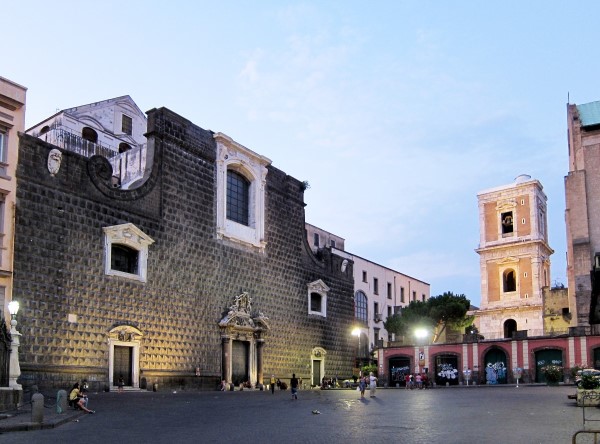
Piazza del Gesù Nuovo
It is a deeply spiritual square, yet full of life. Tourists cross it along Spaccanapoli, students use it as a meeting point, and Neapolitans recognize it as one of the city's most iconic settings. Every December 8th, during the Feast of the Immaculate Conception, everyone looks up to the spire: firefighters climb it to place a floral tribute on the statue of the Virgin Mary, in a ceremony much loved by the city.
Piazza del Gesù is a perfect synthesis of Naples: stone, faith, superstition, Baroque art, noise, sudden silence, devotion and constant movement. It is impossible to cross it without stopping, at least for a moment.
Piazza San Domenico Maggiore: nobility, university life and the soul of the historic center
A few steps further along Spaccanapoli,
Piazza San Domenico Maggiore opens before you. It is one of the most elegant and historically dense squares of the ancient city, surrounded by noble palaces, the basilica of the same name and the great Baroque Spire of San Domenico.
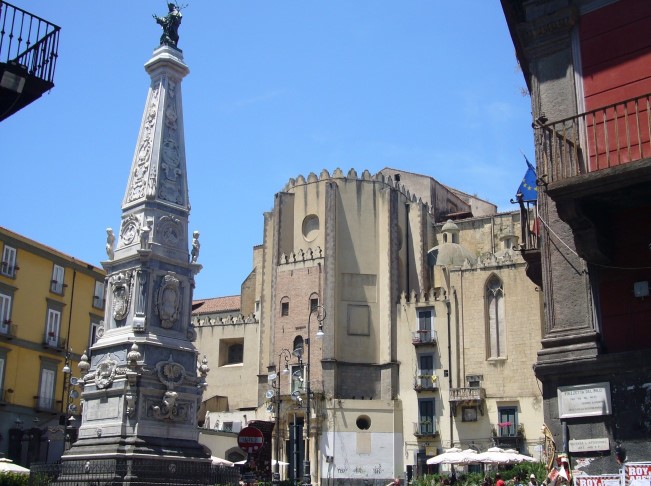
Piazza San Domenico Maggiore
This square tells of an aristocratic and intellectual Naples. Over the centuries it has been linked to noble families, religious orders and university life. Even today it is one of the most beautiful places to pause during a walk through the historic center: just sit down and watch tour guides, students, residents, musicians and travellers constantly crossing paths.
In the evening, the square changes mood: it lights up with tables, conversations and small groups meeting before moving toward the bars of the center. It is solemn, but never still. Even its monuments seem used to the city's endless movement.
Piazza Bellini: Greek walls and student nightlife
Piazza Bellini is one of the most loved squares by young people, university students and anyone looking for Naples' most spontaneous evening atmosphere. It is famous for its bars, outdoor tables, late-night conversations and slightly bohemian mood.
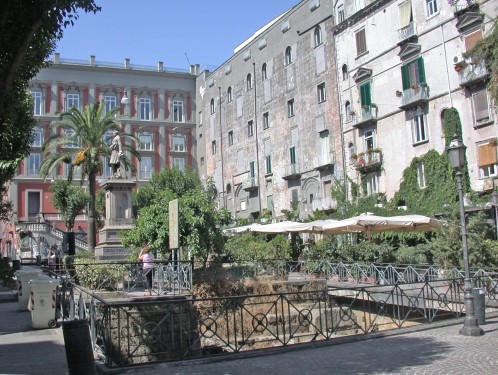
Piazza Bellini
But Piazza Bellini is not only nightlife. In the center of the square you can see important remains of the ancient Greek walls of Neapolis: a fragment of a very old city living together with aperitifs, music, students and artists. This contrast is perhaps its greatest charm: you sit down for a drink and, just a few meters away, the Naples of more than two thousand years ago resurfaces.
It is a square to be experienced slowly. By day it has a cultural and university character; by night it becomes one of the symbols of the historic center's nightlife. Piazza Bellini is Naples when it does not need to pose for a picture.
Piazza Cavour: between the Archaeological Museum and the Sanità district
Piazza Cavour is a large connecting square, often crossed rather than contemplated, but essential for understanding the city. It lies between the National Archaeological Museum, Via Foria, Porta San Gennaro and the entrance to the Rione Sanità.
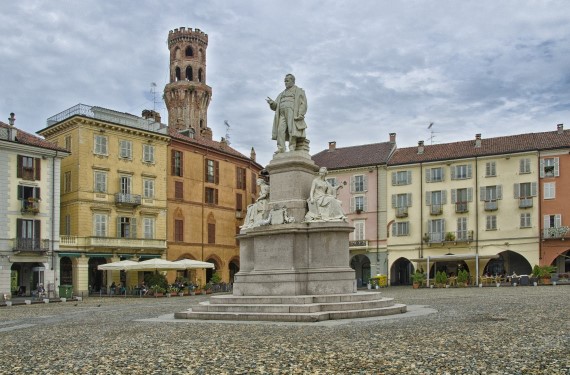
Piazza Cavour
It is a border square, in the best sense of the word: it connects the Naples of great museums with the popular, intense and spiritual Naples of the Sanità district. From here you can walk up to the Archaeological Museum, enter the ancient center through Porta San Gennaro, or move into one of the richest neighborhoods in the city for stories, churches, catacombs and lived-in palaces.
Its importance lies precisely in movement. Piazza Cavour is not only a place to photograph, but a starting point. Anyone who wants to discover a deeper Naples will sooner or later pass through here.
Piazzetta Nilo and Largo Corpo di Napoli: the multicultural secret of the ancient center
Between San Domenico Maggiore and the Decumanus Major lies
Piazzetta Nilo, also known as Largo Corpo di Napoli. It is small, but extremely meaningful: here stands the statue of the god Nile, a testimony to the ancient connection between Naples and communities from the East and Egypt.
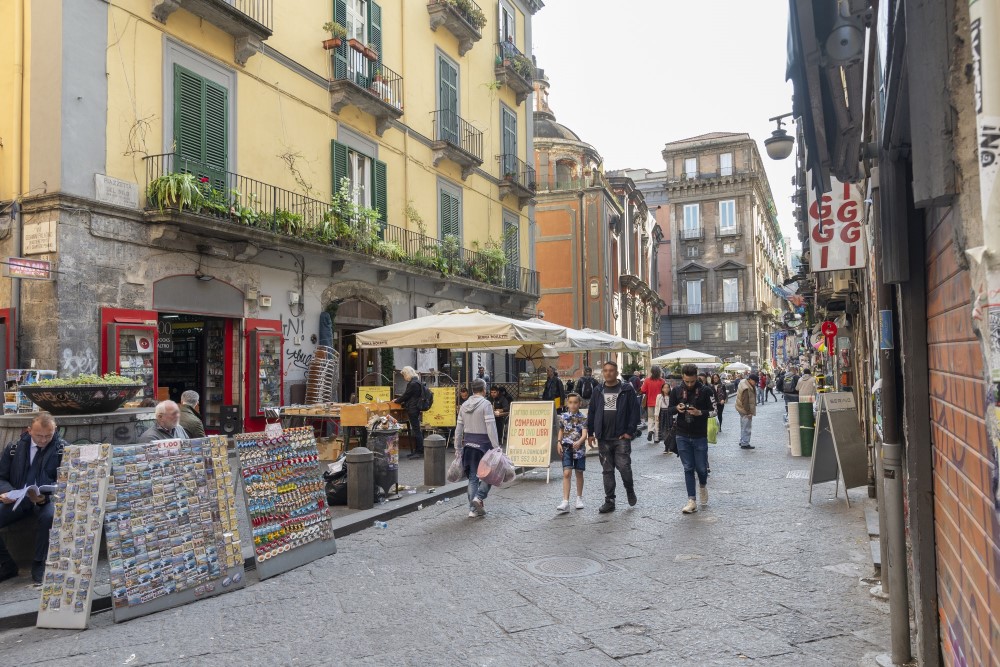
Piazzetta Nilo - Largo Corpo di Napoli
The name "Corpo di Napoli", meaning "Body of Naples", already says a lot: this little square truly seems to preserve a piece of the city's deepest body. It is less monumental than others, but highly evocative, because it tells of Greek-Roman, cosmopolitan, layered Naples, capable of absorbing different cultures and turning them into identity.
Passing through here, people often go too fast. Instead, it is worth stopping, looking at the statue, observing the palaces and listening to the sound of the historic center. Naples' squares do not always need to be large: some are tiny secrets.
Piazza Mercato: the people's square, between revolts and ancient fairs
Piazza Mercato is one of the most historically powerful squares in Naples. Its name already says a lot: for centuries it was a place of trade, exchange, crowds, goods and popular life. But it was also the setting of dramatic events that shaped the city's history.

Piazza Mercato
It is especially linked to the figure of Masaniello and the revolt of 1647 against taxes and viceregal misgovernment. Here the people were not spectators, but protagonists. Piazza Mercato therefore has a different soul from the noble squares: it is the square of voices, merchants, fish sellers, protests and daily struggle.
Today it no longer has the central role it once had, but its memory remains very strong. Walking here means crossing a popular and rebellious Naples, less polished and more rugged, but essential for truly understanding the city.
Piazza Garibaldi: the gateway to the city
Piazza Garibaldi is the square of arrival. Those who reach Naples by train often meet it first: large, complex, busy and constantly moving. It is the square of the Central Station, travellers with luggage, commuters, buses, metro lines, hotels and shops.
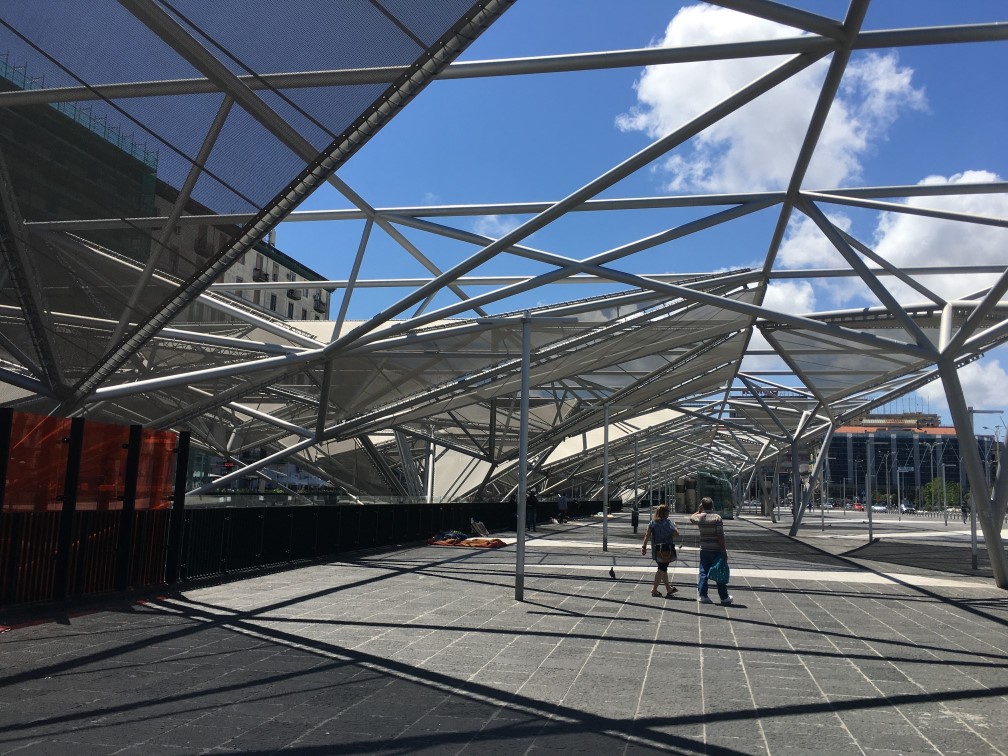
Piazza Garibaldi
It is not postcard Naples, but it is very real Naples. Piazza Garibaldi is the first impact with the city: chaotic, fast, commercial and multicultural. It is a square that changes constantly, also because of works and transformations in the station area, but it remains Naples' great urban hub.
For many visitors it is just a place to cross quickly. Yet it tells a great deal: Naples as a city of arrivals and departures, meetings, different languages, traffic and energy. It is a tiring square, but a deeply contemporary one.
Piazza Carlo III: the grand and social face of Bourbon Naples
Piazza Carlo III is dominated by the imposing Real Albergo dei Poveri, also known as Palazzo Fuga. Its presence is so powerful that the entire square becomes a kind of vast architectural stage.
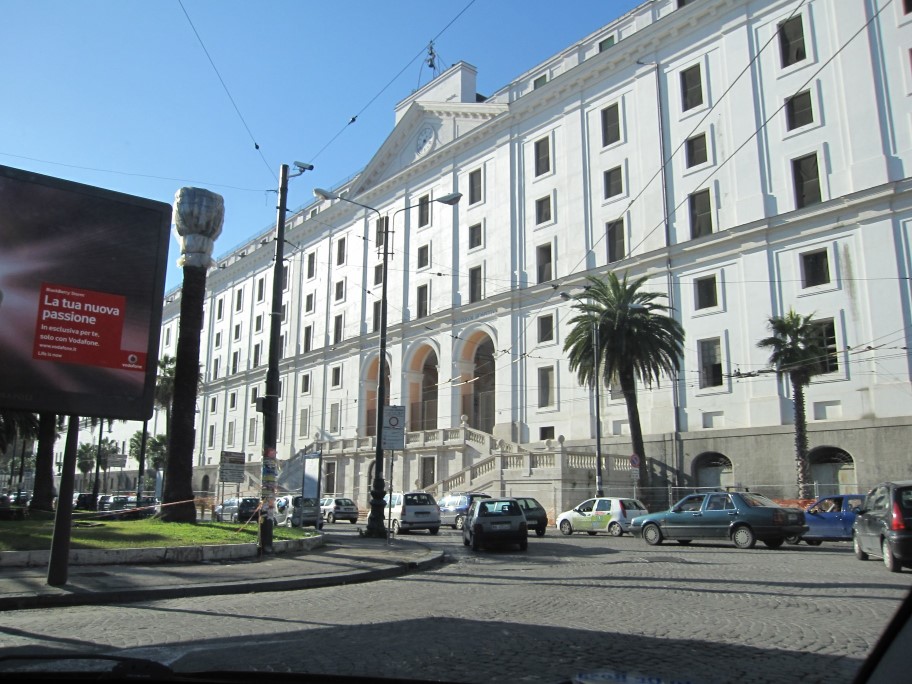
Piazza Carlo III
The building, commissioned by Charles III of Bourbon and designed by Ferdinando Fuga, was conceived as a huge social project to house the poor, orphans and the needy. Though never completed, it remains one of the most impressive buildings in the city. Piazza Carlo III therefore tells of a Bourbon Naples that was not only royal, but also administrative, social and ambitious.
Today the square is busy and popular, far from the ordered elegance of other places, but fascinating for that very reason. Here monumentality lives together with the most concrete daily life: buses, shops, passers-by, dense neighborhoods and an enormous façade that seems to watch everything.
Piazza Vittoria: Chiaia, the Villa Comunale and the breath of the seafront
Piazza Vittoria is one of the most beautiful gateways to the Naples seafront. From here you enter the Villa Comunale and reach Via Caracciolo, the sea, the Riviera di Chiaia and the route toward Mergellina in just a few steps.
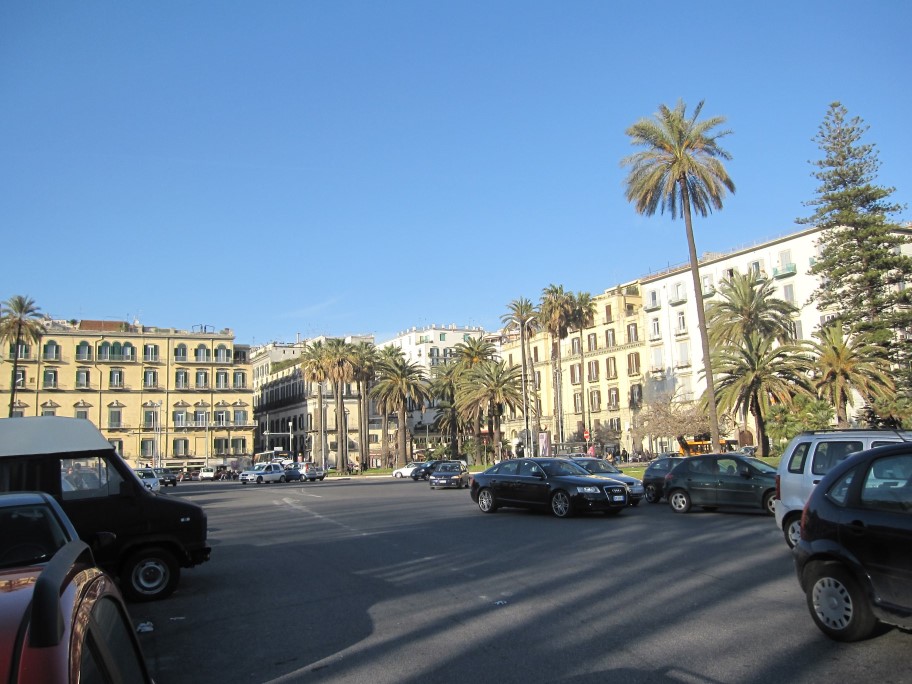
Piazza Vittoria
It is a square connected to strolling, the elegance of Chiaia and the city's bourgeois life. It does not have the theatrical chaos of the ancient center, but a more open rhythm: families, children, couples, runners, tourists looking for the sea and Neapolitans choosing the seafront to breathe.
Piazza Vittoria represents a different Naples: brighter, more open, almost stretched out before the Gulf. It is the point where the historic city meets the pleasure of walking and the beauty of the panorama.
Piazza Sannazaro: Mergellina, the siren and Naples by the sea
Piazza Sannazaro is one of the most characteristic squares in the Mergellina area. At its center stands the Fontana della Sirena, the Mermaid Fountain, recalling the myth of Parthenope and the deep bond between Naples and the sea.
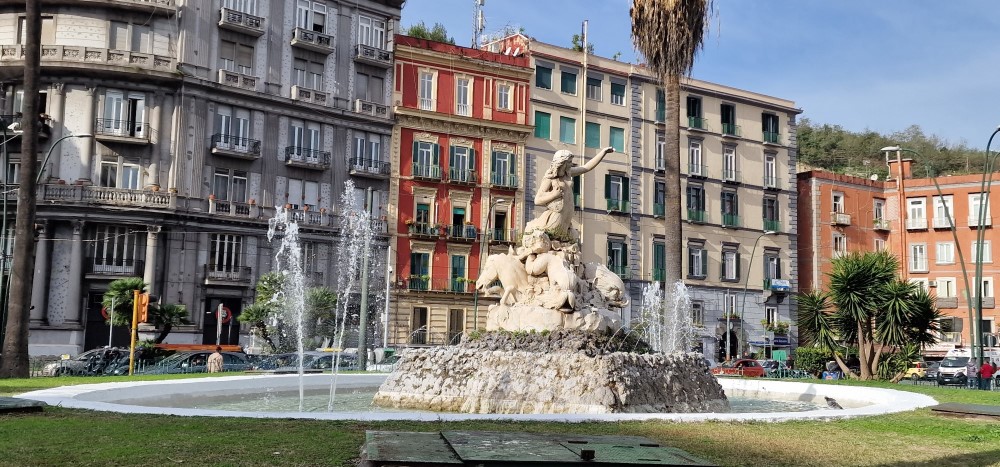
Piazza Sannazaro
It is a place of passage, but also of pause: cafés, pizzerias, kiosks, restaurants, cars heading toward Posillipo, people walking down to the seafront or up toward the hill districts. Here Naples has both a maritime and a popular flavor.
Piazza Sannazaro is perfect for understanding Mergellina: elegant but lively, chaotic but scenic, crossed by those going to the sea, returning from work, stopping for coffee or eating a pizza. It is a square that tastes of salt, traffic, sirens, wind and the smell of an oven.
Piazza dei Martiri: elegance, memory and Chiaia's promenade
Piazza dei Martiri is one of the most refined squares in Naples. It lies in the heart of Chiaia, among boutiques, elegant palaces, noble side streets and routes leading toward Via Chiaia, Via dei Mille and the seafront.
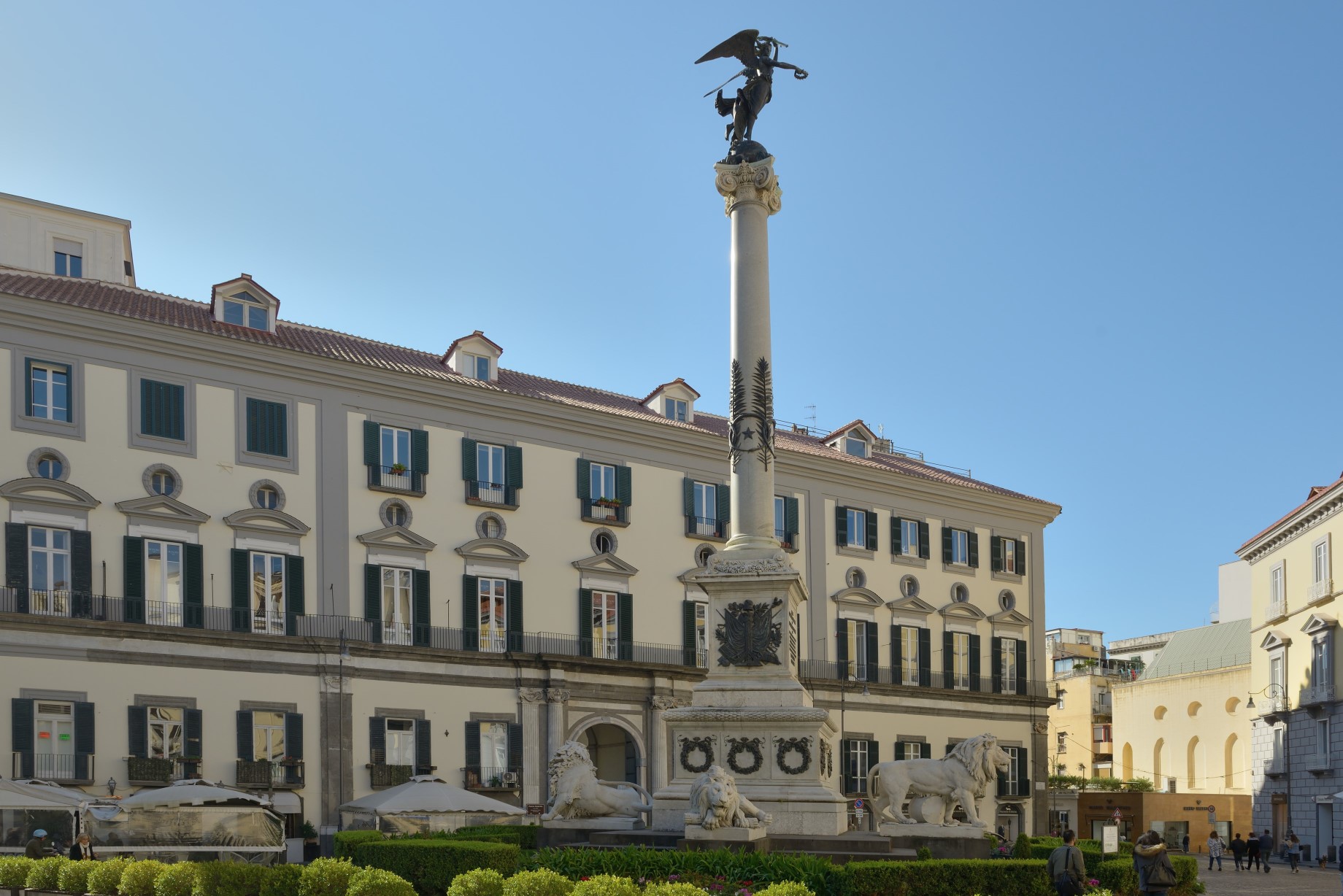
Piazza dei Martiri
The monument at the center of the square commemorates Neapolitan martyrs from different phases of revolutionary and Risorgimento history. It is therefore a square of civic memory, but also a place of elegant strolling, shopping and meetings in one of the city's chicest areas.
Unlike the more popular squares of the historic center, Piazza dei Martiri has a quieter, more bourgeois tone. It is the Naples of monumental doorways, curated shop windows, noble palaces and slow walks. A different secret, less noisy, but very Neapolitan.
Piazza Vanvitelli: the everyday heart of Vomero
Piazza Vanvitelli is the symbolic center of Vomero. Here Via Scarlatti and Via Bernini intersect, two essential axes of the district, and every day students, families, workers, young people, shoppers and people heading to the metro or nearby funiculars pass through.
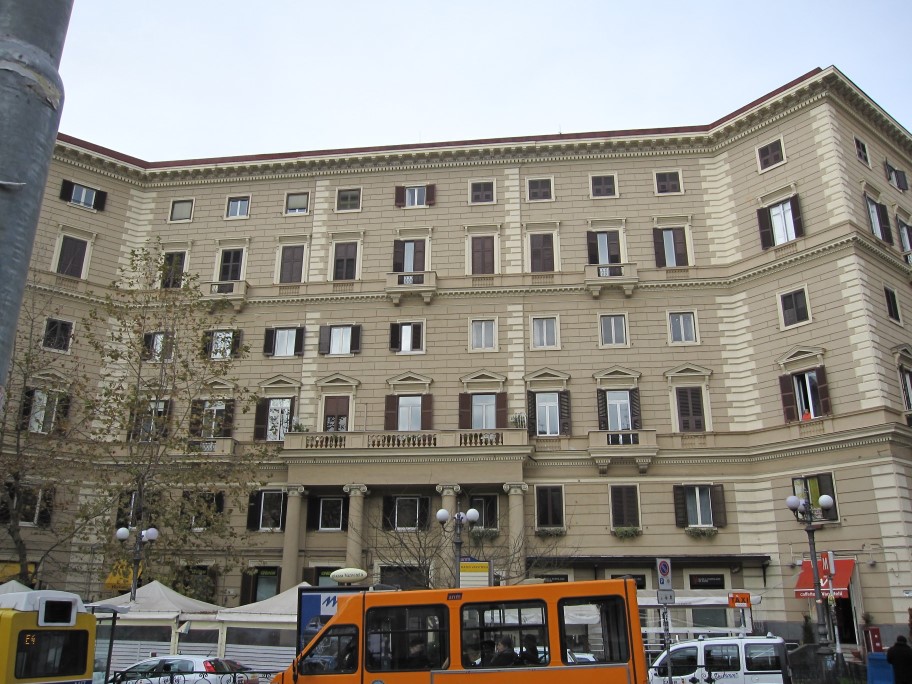
Piazza Vanvitelli
It is a modern square compared with those of the ancient center, born with the development of Vomero between the 19th and 20th centuries. But its role in daily life is enormous. For many Neapolitans it is a natural reference point: "let's meet at Vanvitelli" means meeting in the heart of hilltop Naples.
In the evening, especially on weekends, the district comes alive with bars, ice-cream shops, pubs, pizzerias and strolling. Piazza Vanvitelli tells of a less touristy but very lived-in Naples: orderly, commercial, young, hilly and connected to everyday life rather than postcards.
An itinerary through the squares of Naples
Visiting all these squares in a single day would only be possible by rushing, but Naples does not love those who rush too much. It is better to divide them into routes. A monumental itinerary can start from Piazza Municipio, continue toward Piazza Trieste e Trento and end in Piazza del Plebiscito. A historic-center itinerary can connect Piazza Dante, Piazza Bellini, Piazza del Gesù Nuovo, Piazza San Domenico Maggiore and Piazzetta Nilo. For a more popular and intense Naples, Piazza Cavour and Piazza Mercato tell two very deep souls of the city.
Those looking for the sea can follow Piazza Vittoria and Piazza Sannazaro, breathing in the seafront and Mergellina. Those who want to experience the Naples of the upper districts should go up to Vomero and stop in Piazza Vanvitelli. Every square is a gateway, but no single square tells Naples by itself: it is the combination of these different and contradictory spaces that creates the city's true face.
The squares of Naples are not simple urban spaces: they are places of memory, spontaneous theatre, living history and everyday life. They are where the city shows itself without filters, with its beauty, its chaos, its nobility, its irony and its popular heart.



No comments have been published yet. Be the first to leave one.